---
title: Our Team | Threatened Species Conservancy
description: Meet our dedicated team of experts committed to conserving Australia's threatened species through innovative research, community engagement, and impactful conservation programs. Join us in making a difference.
---
[Skip to Content](https://www.tsconservancy.org/our-team#body)
[](https://www.tsconservancy.org/?hsLang=en)
Toggle Menu
- [Home](https://www.tsconservancy.org)
- About Us
Toggle children for About Us
- [Our Story](https://www.tsconservancy.org/our-story)
- [Our Board](https://www.tsconservancy.org/our-board)
- [Our Team](https://www.tsconservancy.org/our-team)
- [Our Annual Reports](https://www.tsconservancy.org/annual-reports)
- [Our Consultancy Services](https://www.tsconservancy.org/consultancy)
- What We Do
Toggle children for What We Do
- [Our Projects](https://www.tsconservancy.org/our-projects)
- [Our Publications](https://www.tsconservancy.org/publications)
- [Our Partners](https://www.tsconservancy.org/our-work)
- [Recovery Teams](https://www.tsconservancy.org/recovery-teams)
- Get Involved
Toggle children for Get Involved
- [Make A Difference](https://www.tsconservancy.org/make-a-difference)
- [Events](https://www.tsconservancy.org/events)
- [Careers](https://www.tsconservancy.org/careers)
- [Donate Today](https://www.tsconservancy.org/?form=FUNALYACUGY)
- Open Search
Search Site
Submit Search
Get To Know Us
# Our Team
Meet the dedicated team working every day to protect our wildlife and create a future where Australia’s unique species can thrive.
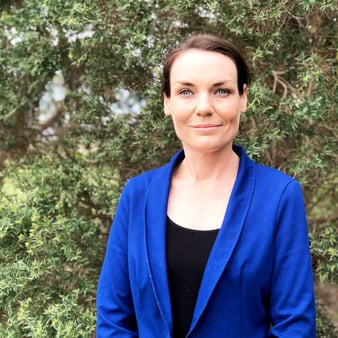
Chief Executive Officer
## Abi Smith
**Fauna Ecologist | Conservation Leader | Not-for-Profit Specialist**
Abi Smith (she/her) is the Founder and Chief Executive Officer of the Threatened Species Conservancy (TSC). A fauna ecologist with over 25 years of experience in threatened species recovery, wildlife management, and animal husbandry.
Her career spans senior roles across federal and state government, not-for-profit organisations, zoos, and museums—where she has led large teams, conducted ecological research, developed recovery strategies, and delivered large-scale conservation programs across Australia and it’s islands.
Abi specialises in ornithology, herpetology, and island conservation, with a strong interest in translocation ecology. She is also a committed leader in the environmental sector, currently serving as a National Committee Member for the Australian Island Alliance, as Deputy Chairperson (Operations) for Landcare Victoria Inc., Chairperson of the Pink-tailed Worm-lizard RecoveryTeam, and a member of several scientific advisory groups.
Abi holds a Master of Environment (Policy and Governance), Bachelor of Science (Ecology), Diploma of Leadership and Management, and a Diploma of Governance (Not-for-Profit).
---
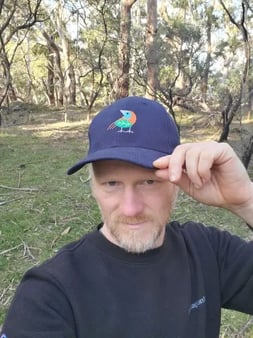
Senior Threatened Species Ecologist
## Dr. Stan Wawrzyczek
Stan (he/him) is a botanist and pollination ecologist. He is passionate about protecting and restoring native flora along with their ecological interactions. His PhD, completed in 2025, investigated the importance of birds, mammals and insects for pollination of the heathland banksias in the southwest Australian biodiversity hotspot. Stan's expertise is in flora and fauna surveys, plant reproduction, and population genetics.
Through working with TSC he aims to help understand the threats our flora and the pollinator communities are facing, and design and implement conservation actions to ensure our most vulnerable species are secure and thrive.
---
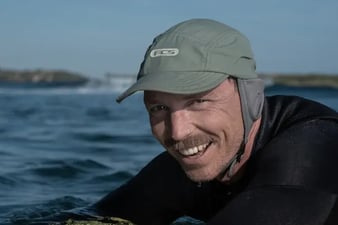
Threatened Species Ecologist
## Mitch Burrows
Mitch (he/him) has been working in the ecological science and landscape management industries as an environmental science professional for over 10 years.
Mitch has an Honours degree in Marine Science and specialises in marine mammal ecology, ornithology and native flora ecology. Mitch is the author of the recently published 'Field Guide to the Native Flora of Millowl (Phillip Island)'.
Having worked previously in both the public and private sectors, Mitch has a well-rounded understanding of the conservation science industry as a whole and applies this knowledge effectively in threatened species conservation. Additionally, Mitch has experience working with many marine megafauna species including humpback whales and Australian fur seals, cryptic inshore dolphin species, marine plants, migratory shorebirds and lots more.
Driven by a ceaseless desire to understand and protect the natural world, Mitch supports the TSC through on-ground conservation research and advocacy.
---
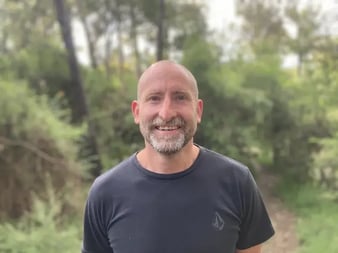
Senior Threatened Fauna Ecologist
## Dr. Matt West
Matt West (he/him) is a fauna ecologist with extensive experience in threatened species management that includes wildlife population monitoring, conservation translocations, recovery planning, and breeding of species for captive conservation programs.
Matt gained this experience as an academic researcher, as a zookeeper and zoo researcher, as a private wildlife consultant and by assisting environmental not-for-profit organizations.
Whilst broadly interested in all taxa and particularly native Australian vertebrates, Matt has dedicated most of his career to understanding and preventing the decline of threatened amphibians. He is an advocate for strengthening relationships with communities and Traditional Owners in recognition that effective partnerships with these groups are crucial for conservation success.
Matt holds qualifications in Zookeeping, a Bachelor of Science, Masters of Reproductive Science and a PhD in Amphibian Ecology.
---
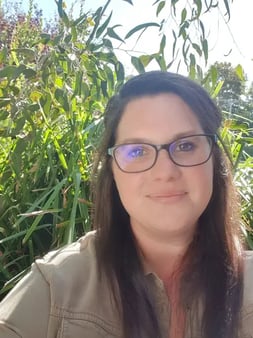
Threatened Flora Ecologist
## Eleanor Fox
Elle (she/her) has been working in the field of ecology and environmental management for over 15 years. Elle has her Bachelor of Applied Science in Environmental Management, Honours in arid ecosystem ecology and herpetology. She is currently completing her PhD at Federation University Australia, investigating the genetic structure of two critically endangered Victorian Eucalyptus species.
Elle has worked previously as a Landcare coordinator, thoroughly enjoying her time working with local communities to carry out ecological rehabilitation work and revegetation projects on their properties. Elle has worked with native small mammals, reptiles and birds of prey, but is always drawn back to her passion for botany and discovering what underpins the structure of Australian ecosystems. Elle supports the TSC through communications and the development of online resources.
---
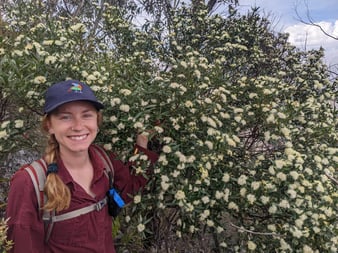
Graduate Flora Ecologist
## Cherish Arrowsmith
Cherish (she/her) holds a Bachelor of Science from The University of Queensland where she majored in Ecology, Conservation Biology and Marine Biology.
Since graduating in 2025, she has completed a research internship with the Conservation Ecology Centre and volunteered with the Weed Eradication Program on Lord Howe Island. Through these opportunities, she gained hands-on experience with feral species eradications, threatened flora surveys and diverse marine projects including surveys of intertidal communities, dugongs, humpback whales, corals and phytoplankton.
Cherish completed an internship with the Threatened Species Conservancy during her bachelor’s degree and has since joined the team in a graduate role. As a flora ecologist, she is particularly interested in plant species and the complexity of interactions between organisms and their environment within ecosystems.
Cherish is driven by her passion for conservation and curiosity of the natural world to achieve positive outcomes for our threatened species through research and science communication.
---
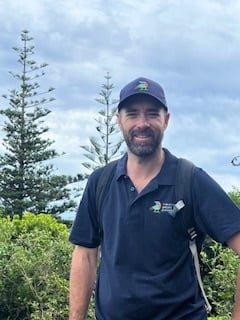
Senior Landscape Ecologist
## Ben Thomas
Ben Thomas (he/him) brings almost 20 years’ experience as a Landscape Ecologist to his volunteer role with the Threatened Species Conservancy (TSC). He has worked across state and local governments as well as the not-for-profit sector, and currently serves as Reserves Manager at Phillip Island Nature Parks. He holds a Bachelor of Arts in Nature-based Tourism and a Diploma of Management.
Ben’s expertise spans island pest eradication, threatened flora and fauna recovery, fire and biodiversity interactions, and grassland conservation. He has served as a Threatened Species Officer in central Victoria, and worked extensively on Norfolk Island, leading eradication programs and strengthening biosecurity.
Recognised for his practical land management skills and conservation leadership, Ben has guided teams and programs to deliver measurable outcomes for biodiversity. He often volunteers his time and expertise on the ground for TSC, directly contributing to efforts that save and recover threatened species across Australia.
Since TSC’s inception in 2018, Ben has been a dedicated supporter, contributing his skills, experience, and leadership as a volunteer. His long-standing involvement has been crucial to TSC’s success, and he remains an invaluable part of our on-ground conservation team.
---
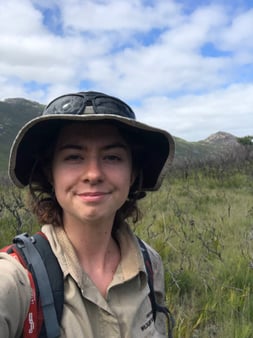
Graduate Botanist
## Mads Dwyer
Mads (they/them) is a botanist and fire ecologist who has been working in conservation and ecological restoration since 2022.
Mads completed a Bachelor of Wildlife and Conservation Biology at LaTrobe University, where they are currently completing a Masters of Science by research. Their masters research, centred on Coast Tea Tree invasion of Sand Heathlands in southeast Victoria, analyses historic fire regime, standing and seedbank floristic communities, to determine the drivers of this invasion, and its consequences on the floristic community.
Mads has prior experience in plant propagation, on-ground land management, community engagement, undergraduate demonstrating and flora surveys. They have a good working knowledge of south-east Australian flora, and are committed to working towards the preservation of threatened plants and communities into the future.
---
IMG_3399(1).jpeg?width=338&height=338&name=(Upload-from-mobile-1783485244)IMG_3399(1).jpeg)
Zoology Intern
## Sooyeon Ahn
Soo holds a Bachelor of Zoology and Animal Science from Deakin University and an Honours degree in Animal Behaviour and Animal Management from the University of Melbourne.
Originally from Korea, Soo moved to Australia driven purely by her passion for animals, determined to build a career in conservation. Her Honours research, conducted in collaboration with the Zoos Victoria Detection Dog team, explored the sleep behaviour and welfare of conservation detection dogs. During this time, attending the ASZK Conference in Sydney further strengthened her passion for applying animal behaviour to threatened species conservation.
Soo is continuing to expand her knowledge in animal behaviour through Behaviour Works Zoo School, with a particular interest in behavioural welfare and conservation.
Soo first joined the Threatened Species Conservancy as a placement, contributing to threatened butterfly surveys, conservation detection dog experiment and other field conservation activities. She is now an intern with TSC, where she is involved in conservation projects while continuing to build her knowledge and field experience. Her long-term goal is to explore how animal behaviour can be applied to threatened species conservation and contribute to more effective conservation outcomes.
## Join Our Community
Each quarter you’ll get our newsletter with updates and events delivered to your inbox.
[](https://www.tsconservancy.org/?hsLang=en)
- [Careers](https://www.tsconservancy.org/careers)
- [Publications](https://www.tsconservancy.org/publications)
- [Annual Reports](https://www.tsconservancy.org/annual-reports)
Threatened Species Conservancy Inc.
As a Deductible Gift Recipient (DGR) entity, any donations over $2 made to the Threatened Species Conservancy may be tax deductible in Australia Agentic Giving
info@tsconservancy.org
Photographs by Colin Cook, Hannah Nicholls, Amber Noseda, Abi Smith, Luis Ortiz-Catedral & [Unsplash](https://unsplash.com/)
All rights reserved. | [Privacy Policy](https://www.tsconservancy.org/hubfs/Privacy%20Policy%20Final%20April%202026.pdf?hsLang=en) |
[](https://www.tsconservancy.org/?hsLang=en)